The US housing market is offering buyers more choices, yet transaction activity remains stalled. Even though the inventory of existing homes for sale has been rising since late 2023, we have seen the annual sales trend flatline at around four million units.
This disconnect suggests that while the supply of homes available for purchase is improving, it is doing so faster than the pool of willing and able buyers. More listings can improve selection and negotiating conditions, but it takes complete transactions to drive demand for housing-related products and services.
The US housing market is offering buyers more choices, yet transaction activity remains stalled. Even though the inventory of existing homes for sale has been rising since late 2023, we have seen the annual sales trend flatline at around four million units.
Existing Home Sales Remain Near Four Million Units
The US Existing Home Sales annual trend stands at 4.049 million units. The annual growth rate (the most recent 12 months of sales compared to the same 12 months one year prior) is only -0.6%, indicating a slight deterioration in sales activity from one year earlier. The shorter-term quarterly growth rate (most recent three months compared to same three months one year prior) is -4.7%, pointing to more material softness in recent months.
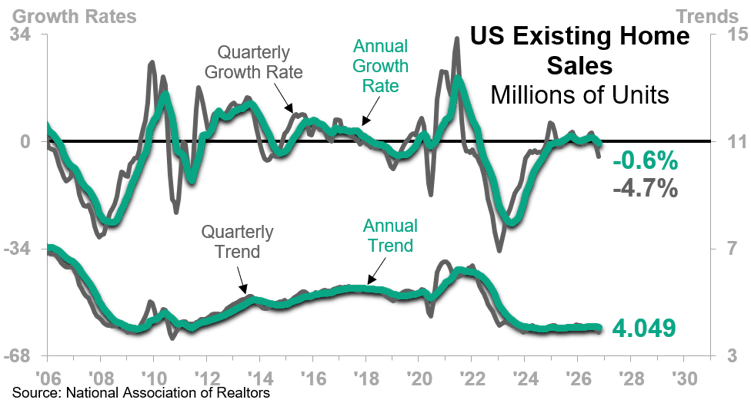
Figure 1: The annual existing home sales trend remains near four million units, while the negative quarterly growth rate signals weaker near-term momentum.
So, existing home sales have stabilized following their earlier decline, but a meaningful upward trend has yet to emerge. A near-zero annual growth rate indicates that the market is largely moving sideways, while the negative quarterly growth rate shows that near-term momentum remains soft.
This subdued transaction volume affects a broad range of housing-adjacent businesses. Companies that depend on home purchases, moves, mortgage activity, or post-sale spending may continue to face a slower demand environment even as other economic indicators improve. For planning purposes, the level of housing turnover remains more important than the number of homes listed for sale.
Inventory Is Rising as New Construction Slows
The supply picture has changed since early 2024. The US Existing Home Inventory annual trend has risen to 1.465 million units, giving potential buyers more options than they had during the most supply-constrained period of the housing cycle.
At the same time, the US Housing Starts annual trend has eased to 1.344 million units. The increase in available existing homes is therefore occurring alongside weaker new residential construction.
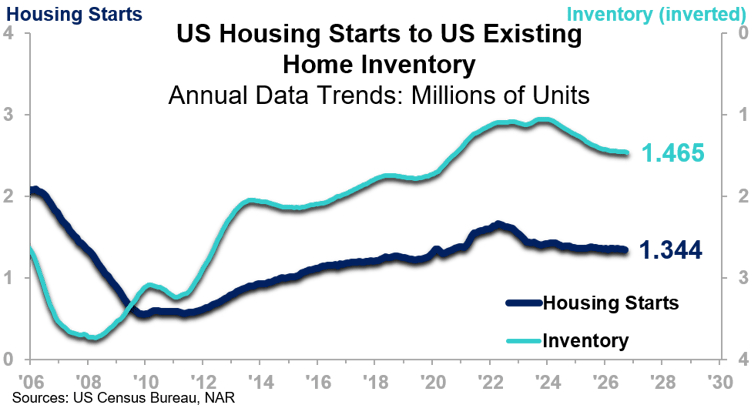
Figure 2: Existing-home inventory has risen to 1.465 million units since early 2024, while the annual trend in housing starts has eased to 1.344 million units.
An increase in inventory can reflect more homes being listed, slower sales, or a combination of the two. In the current cycle, rising inventory paired with stagnant sales points to slower absorption. While buyers may have more selection and negotiating flexibility, these advantages have yet to generate a meaningful increase in transaction activity. Demand remains the greatest obstacle to a stronger housing recovery.
Rising existing-home inventory also increases competition for builders, as new homes must compete with a growing selection of existing properties at a time when overall sales activity remains limited. Builders may respond by remaining cautious with starts, project timing, pricing, and incentives.
Plan for a Housing Market With Low Turnover
Businesses connected to housing should base their plans on transaction volume rather than inventory growth alone. Revenue assumptions, staffing levels, marketing budgets, and working-capital needs should account for the possibility of a gradual recovery.
Management teams can also establish decision triggers tied to improving growth rates. A sustained positive turn in existing home sales, accompanied by stronger customer activity, could support selective increases in inventory, staffing, or capacity. Continued stagnation would favor tighter cost controls and more conservative demand assumptions.
Scenario plans should also account for existing home sales remaining near current levels longer than expected. Companies can then identify which investments remain justified under subdued transaction volumes and which depend on a faster recovery.
Until willing and able buyers return in greater numbers, the housing market is likely to remain better supplied but slow-moving. Business leaders should avoid treating rising inventory as evidence of stronger demand. Broader housing data provides context, while market-specific rates-of-change and company-specific leading indicators should guide planning.
At ITR Economics, we help businesses look beyond headline economic data and translate leading indicators into practical, profitable decisions. Contact us today to speak with a trusted advisor and learn how economic analysis can strengthen your long-term planning.